Tues
5.06.08 through Wed 5.21.08
{Audio
presented during KPFA Fund Drives often originates elsewhere and
therefore is not posted. Resources relating to Fund Drive programs
are provided to the right.}
| R
e s o u r c e s
Left
Forum 2008
|
Mon
5.05.08| Too Hot to Handle?
Twentieth
century civilization is about to collapse, argues Colin Duncan,
because of the imminence of rapid and vast climate change. The environmental
historian laments the decades-long delay in grasping the urgency
and magnitude of what he calls the global defrosting crisis. Duncan
believes a mass collective project must arise to plan a necessary
transition to a new sustainable society.
Listen
to the program
| R
e s o u r c e s
Colin Duncan, "The
Practical Equivalent of War?, or, Using Rapid Massive Climate Change
to Ease the Great Transition Towards a New Sustainable Anthropocentrism"
Berkeley Workshop on Environmental Politics
Colin Duncan, The
Centrality of Agriculture: Between Humankind and the Rest of Nature
McGill-Queen's University Press, 1996 |
Wed
4.30.08| Torture, Empire, Algeria
When
empire is in decline, does the use of torture, or the motivations
behind it, change? For Marnia Lazreg, what the French colonial forces
did to people in Algeria during that nation's war of independence
in the 1950s speaks volumes about the relationship between torture,
power, empire, and even democracy. In Torture and the Twilight
of Empire, Lazreg also draws parallels between French colonial
conduct then and US military conduct today.
Listen
to the program
| R
e s o u r c e s
Marnia Lazreg, Torture
and the Twilight of Empire: From Algiers to Baghdad Princeton
University Press, 2008
Marnia Lazreg, "History
Repeats Itself: France in Algeria, the US in Iraq" History
News Network |
Tues
4.29.08| Wallerstein II; Miller's Memoir
In
this second part of an extended, recorded interview with Immanuel
Wallerstein, the eminent Left scholar shares his opinions on the
USSR's collapse; on George W. Bush and the decline of US power;
and on opposition movement strategy. He also describes the basic
contours of world-systems analysis, which he innovated. Also, Adam
David Miller has written a memoir about growing up African American
in the Jim Crow South.
Listen
to the program
| R
e s o u r c e s
Immanuel
Wallerstein
Adam David Miller, Ticket
to Exile Heyday, 2007 |
Mon
4.28.08| Immanuel Wallerstein
The
influential scholar and author Immanuel Wallerstein argues that
the US was the sole global superpower from 1945 to around 1970,
after which US hegemony went into decline. He also talks about the
1968 revolutionaries' critique of the Old Left movements that had
taken state power, and contends that capitalism "is doomed."
Also, Patrick Wilkinson's new video takes on aerial pesticide spraying.
Listen
to the program
| R
e s o u r c e s
Immanuel
Wallerstein's biweekly commentaries
Immanuel Wallerstein, The
Essential Wallerstein The New Press, 2000
Immanuel Wallerstein,
European Universalism: The Rhetoric of Power The New Press,
2006
LBAM
Takes San Francisco, a video by Patrick Wilkinson |
Wed
4.23.08| Beyond Wage Labor
Is
a new kind of class consciousness taking shape? Many people, writes
Chris Carlsson, are transcending their lives as wage-workers and
in the process building community, learning skills, and doing right
by the environment. In Nowtopia, Carlsson describes the
political potential of activities like vacant-lot gardening, "outlaw"
bicycling, and biofuels tinkering.
Listen
to the program
| R
e s o u r c e s
Chris Carlsson,
Nowtopia: How Pirate Programmers, Outlaw Bicyclists, and Vacant-Lot
Gardeners Are Inventing the Future Today AK Press, 2008
Chris
Carlsson
Shaping
San Francisco |
Mon
4.21.08| Taking (Artistic) Aim
Ellen
McLaughlin has written an adaptation of one of the oldest anti-war
plays, The Trojan Women by Euripides. McLaughlin's play
suggests that the enemy targeted for destruction isn't that different
from ourselves. Sara Shelton Mann and Jo Kreiter have created dance
theater pieces that address environmental crisis and government
lies, respectively.
Listen
to the program
| R
e s o u r c e s
The
Trojan Women at Aurora Theatre
For
the Record: Dancers Debate the Body Politic, an ODC Theater
festival
Sara
Shelton Mann
Jo
Kreiter and Flyaway Productions |
Wed
4.16.08| New Energy Order
In
his new book Rising Powers, Shrinking Planet, Michael Klare
argues that a global political realignment of historic proportions
is under way, based on ever-more-intense competition for reliable
energy supplies. Klare describes emerging Big Power alliances and
rivalries in energy-rich sites like the Caspian basin and Africa.
Listen
to the program
| R
e s o u r c e s
Michael Klare, Rising
Powers, Shrinking Planet: The New Geopolitics of Energy Metropolitan,
2008
Michael
Klare speaks in Berkeley |
| Tues
4.15.08| Poor Moves
A
federal program that demolishes public housing projects moves their
residents to other neighborhoods, in the name of reducing poverty.
According to Susan Greenbaum, poverty is not in fact alleviated
and the communal capacities of poor people are damaged by relocation.
Also, radical historian Eric Hobsbawm discussed socialism, democracy
and the USSR in a 1981 Pacifica Radio interview.
Listen
to the program
| R
e s o u r c e s
Susan
Greenbaum
Rethinking
Marxism
Eric Hobsbawm, Interesting
Times: A Twentieth-Century Life Pantheon, 2007 |
Mon
4.14.08| Abortion Wars
Who
would kill an abortion provider? Why did a violent wing of the anti-abortion
movement emerge in the 1990s? And how did Buffalo become, for a
time, ground zero in this nation's culture wars? Eyal Press examines
the abortion debate and how it affected his father, an abortion
provider, in Absolute Convictions. Mary Schwartz founded
the Buffalo chapter of NOW in 1969. (Encore presentation.)
Listen
to the program
| R
e s o u r c e s
Eyal Press, Absolute
Convictions, My Father, a City, and the Conflict That Divided America
Picador, 2007
Eyal Press in The
Nation
|
Wed
4.09.08| Soils Imperiled
According
to Saed Engel-Di Mauro, a global crisis in soil degradation threatens
our very survival. He describes the contours of the crisis, its
causes, and the impact of social arrangements on soil health and
integrity. And Paul Paz y Miño discusses a breakthrough in
a lawsuit against Chevron for damage done to Ecuador's Amazon rainforest.
Listen
to the program
| R
e s o u r c e s
Saed
(Salvatore) Engel-Di Mauro
Capitalism
Nature Socialism
Amazon
Watch
ChevronToxico |
Tues
4.08.08| Solidarity with Africa
The
US-based campaigns against South African apartheid attracted a lot
of attention, but they did not of course constitute the only activism
around Africa solidarity. William Minter has co-edited a volume
that tells the story of five decades of solidarity between Africans
and Americans. In a chapter about the 1950s, Lisa Brock profiles
three committed organizers.
Listen
to the program
| R
e s o u r c e s
Minter, Hovey & Cobb Jr.,
eds., No
Easy Victories: African Liberation and American Activists over a
Half Century, 1950-2000 Africa World Press, 2008
AfricaFocus
Lisa
Brock |
Mon
4.07.08| Lessons from Clamor
Clamor
Magazine, an award-winning quarterly covering radical culture and
politics, engaged with a young left audience and provided a non-sectarian
forum for radical discussion until it closed shop in 2006. Clamor
co-founder and publisher Jen Angel talks about the nuts and bolts
lessons that can be gleaned for media and left institutions from
that publication's experience.
Listen
to the program
| R
e s o u r c e s
Jen
Angel
Jen Angel, Becoming
the Media: A Critical History Of Clamor Magazine PM Press, 2008 |
Wed
4.02.08| Faces of "Labor"
If
workers of the world have yet to unite, and if there exists a great
variety of people doing different kinds of work around the world,
are references to a global labor force useful? Michael Denning talks
about what he sees as the imaginative crisis of labor. He also emphasizes
the importance of wageless people: their existence, their organizing
activity, and their political potential.
Listen
to the program
| R
e s o u r c e s
Initiative
on Labor and Culture at Yale University
Michael Denning, Culture
in the Age of Three Worlds Verso, 2004
Social
Text
Sebastiao
Salgado |
Tues
4.01.08| The Case for Chechnya
Is
Chechnya, so often associated with lawlessness, Islamic extremism,
and failed statehood, entitled to independence? Tony Wood has written
about the long tradition of Chechen resistance to Russian imperial
designs. He also links the most recent invasion of Chechnya with
Vladimir Putin's rise to power and his authoritarian agenda.
Listen
to the program
| R
e s o u r c e s
Tony Wood, Chechnya:
The Case for Independence Verso, 2007
Tony Wood, "The
Case for Chechnya" New Left Review |
Mon
3.31.08| Sowing, Reaping
Whoever
controls the future of seeds controls the future of life on earth.
So asserts Claire Cummings in a new book, which takes on industrial
farming and genetic engineering and points the way toward a sustainable,
earth-friendly agriculture. One of Cummings's heroes is Wes Jackson,
who's working to transform the major grain crops into hardy, diverse
perennials.
Listen
to the program
| R
e s o u r c e s
Claire Hope Cummings, Uncertain
Peril: Genetic Engineering and The Future of Seeds Beacon, 2008
The
Land Institute |
Wed
3.26.08| Oil, Class, "Enclosure"
Peak
Oil, with its assertions that oil production is or soon will be
in permanent decline, is all the rage. But from a radical, anticapitalist
perspective, does Peak Oil hold water? The philosopher George Caffentzis
offers a critique that emphasizes the role of workers and displaced
communities in oil production.
Listen
to the program
| R
e s o u r c e s
George Caffentzis, No
Blood For Oil! Energy, Class Struggle, and War, 1998-2004 radicalpolYtics,
2005 |
Tues
3.25.08| Stiglitz on the Iraq Occupation
Nobel
laureate and former chief economist for the World Bank, Joseph Stiglitz,
talks about the costs of the invasion of Iraq and the gloomy prospects
for the US economy with journalist Doug Henwood.
Listen
to the program
| R
e s o u r c e s
Joseph
Stiglitz
Joseph E. Stiglitz & Linda
J. Bilmes, The
Three Trillion Dollar War: The True Cost of the Iraq Conflict
W.W. Norton, 2008
Doug Henwood's Behind
the News |
Mon
3.24.08| Rising in the East?
Does
dissent happen in Japan, an economic powerhouse around which stereotypes
of Japanese homogeneity and obedient conformity abound? Sabu Kohso
is organizing resistance to the upcoming G8 summit in Hokkaido;
he's also written about recent social movements and workers' struggles
in Japan. Workers are also struggling in China, in places like Shenzhen;
Robert Weil describes recent developments.
Listen
to the program
| R
e s o u r c e s
Yoda & Harootunian, eds.,
Japan
After Japan: Social and Cultural Life from the Recessionary 1990s
to the Present Duke University Press, 2006
No!
G8 Action
Robert Weil,
"City of Youth" on the China Study Group website |
Wed
3.19.08| Disaster? Success? Both?
What
have we wrought in Iraq? Has the troop surge worked, can Baghdad's
neighborhoods be resucitated, has the US oil grab succeeded, and
would a Democratic president withdraw the troops? Michael Schwartz
and A.K. Gupta provide in-depth commentary, and Brian Edwards-Tiekert
gets arrested at an antiwar protest in San Francisco.
Listen
to the program
| R
e s o u r c e s
Michael Schwartz, "Why
Did We Invade Iraq Anyway?" TomDispatch.com
Michael
Schwartz
Articles
by A.K. Gupta in The Indypendent |
Tues
3.18.08| Russell Banks; Mountaintop Removal
In
his new novel The Reserve, Russell Banks examines class,
politics, love, and madness in a privatized wilderness in the Adirondacks.
Another kind of madness, called mountaintop removal coal mining,
is taking place in the Appalachians. Lenny Kohm describes what's
being done and the impact on local ecologies and communities.
Listen
to the program
| R
e s o u r c e s
Russell Banks, The
Reserve HarperCollins,
2008
End
Mountaintop Removal |
Mon
3.17.08| Change Agents
For
eight months Sujatha Fernandes lived in a popular barrio in Venezuela,
where she learned about the roles played by barrio women in that
nation's urban social movements. She's also written about the political
sensibilities of cultural workers in Cuba. Frances Tran took a CUNY
course taught by Fernandes about immigrant workers, including street
vendors, in New York City.
Listen
to the program
| R
e s o u r c e s
Sujatha
Fernandes
Sujatha Fernandes, Cuba
Represent! Cuban Arts, State Power, and the Making of New Revolutionary
Cultures Duke U. Press, 2006
The Peopling of New York City:
Class
Papers |
Wed
3.12.08| War & Feminization
Are
the logics of war and neoliberalism compatible with the empowerment
of women and the pursuit of feminist goals? Mary Hawkesworth describes
what happens to women, social attitudes, and political structures
both during war and after demobilization. She also cites processes
of feminization that affect labor, patterns of poverty, and even
men.
Listen
to the program
| R
e s o u r c e s
Hawkesworth & Alexander,
eds., War
and Terror: Feminist Perspectives U. of Chicago Press, 2008
Ferguson & Marso, eds.,
W
Stands for Women: How the George W. Bush Presidency Shaped a New
Politics of Gender Duke U. Press, 2007
Mary
Hawkesworth |
Tues
3.11.08| Michael Albert Remembers
A
political renegade, a man deeply committed not just to combating
social ills but to developing a vision that might guide the Left,
has produced a memoir. In Remembering Tomorrow, Michael
Albert writes about his Sixties activism, his institution-building
feats, his radical theorizing, and his understanding of worker self-management
efforts in places like Venezuela and Argentina.
Listen
to the program
| R
e s o u r c e s
Michael Albert, Remembering
Tomorrow: From SDS to Life After Capitalism Seven Stories, 2007
Parecon |
Mon
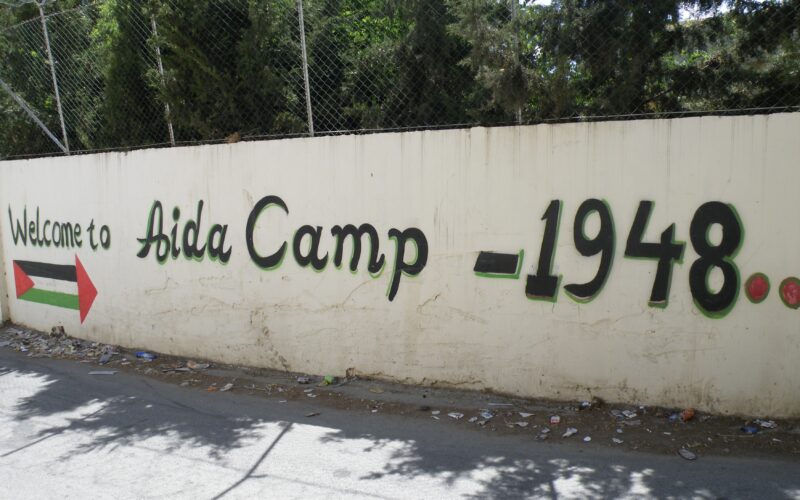
3.10.08| Right of Return
A
Palestinian longs to return to his former house. He meets the woman
who moved into that house when Israel was established sixty years
ago. He is jailed for many years; she becomes a peace activist.
In The Lemon Tree, Sandy Tolan tells the big-picture story
of the Israeli-Palestinian conflict and the parallel, very personal
story of Bashir and Dalia.
Listen
to the program
| R
e s o u r c e s
Sandy Tolan, The
Lemon Tree: An Arab, A Jew, and the Heart of the Middle East
Bloomsbury, 2007 |
Wed
3.05.08| Target Practice
Intolerance
takes many forms. Anna Stubblefield describes how white elites in
the US used eugenicist ideas to target "tainted" whites
and, specifically, white women deemed feebleminded. And Heather
MacDonald's film Ballot Measure 9 documents the violence
and invective that accompanied a Religious Right-directed assault
on gay rights in Oregon in 1992.
Listen
to the program
| R
e s o u r c e s
Anna
Stubblefield
Anna Stubblefield, Ethics
along the Color Line Cornell University Press, 2005
Ballot
Measure 9, a film by Heather Lyn MacDonald |
Tues
3.04.08| Charisma and the Cultural Revolution
What
moves people to get involved on a societal level, to push for reform
or perhaps even carry out a revolution? Joel Andreas examines the
role of charisma in mobilizing people; he takes as a case study
the rebel movements of the Chinese Cultural Revolution. He also
discusses the relevance of his findings to how recent and current
social movements, with their charismatic and bureaucratic tendencies,
can be evaluated.
Listen
to the program
| R
e s o u r c e s
Joel
Andreas
Joel Andreas,
"The Structure of Charismatic Mobilization: A Case Study of
Rebellion During the Chinese Cultural Revolution" American
Sociological Review
Dawn
Gable's PPJC-sponsored talk in Palo Alto |
Mon
3.03.08| The Enemy of Nature
Are
we headed toward human-caused eco-catastrophe, and if so, how do
we change direction? In The Enemy of Nature, Joel Kovel
argues that capitalism is inherently anti-ecological, and that no
reform -- whether recommended by Al Gore, "green" companies,
Kyoto backers, or eco-localists -- that leaves its operation intact
can effectively address the growing ecological crisis.
Listen
to the program
| R
e s o u r c e s
Joel
Kovel
Joel Kovel, The
Enemy of Nature: The End of Capitalism or The End of the World?
Zed Books, 2007
Capitalism
Nature Socialism |
Wed
2.27.08| Radical Teach-In
Is
truly effective education being delivered, or encouraged, in our
public schools? If not, why is No Child Left Behind still around,
and what would be a saner alternative? Monty Neill critiques NCLB
and suggests ways of improving education. Kai Lundgren-Williams
argues for radical changes to education based on what he calls complex
communication.
Listen
to the program
| R
e s o u r c e s
FairTest |
Tues
2.26.08| Zapatista Women, Mexican Movements
Integral
to the Zapatista movement has been the concept of building power
from below, in part through a process of dialogue and listening.
Hilary Klein and Marina Sitrin attended the most recent Zapatista-sponsored
gathering, a women's encuentro in December 2007. Gustavo Esteva
talks about the Oaxacan uprising and where that movement stands
now.
Listen
to the program
| R
e s o u r c e s
Hilary Klein, "'We
Learn As We Go' -- Zapatista Women Share Their Experiences"
Toward Freedom
Chiapas
and the Zapatista Rebellion |
Mon
2.25.08| Cultural Turn to the Right?
Seen
as radical to many of its adherents, the set of ideas often known
as cultural theory, postmodernism, or poststructuralism have been
reviled by conservatives as subversive and dangerous. Timothy Brennan
argues, however, that these ostensibly left theories have actually
fed into the ascendancy of the right.
Listen
to the program
| R
e s o u r c e s
Timothy
Brennan
Timothy Brennan, Wars
of Position: The Cultural Politics of Left and Right Columbia
University Press, 2006
|
Wed
2.06.08 through Wed 2.20.08
{Audio
presented during KPFA Fund Drives often originates elsewhere, and
therefore is not posted. Resources relating to Fund Drive programs
are provided to the right.}
| R
e s o u r c e s
Paul
Robeson: Portraits of the Artist
John
Henrik Clarke: A Great and Mighty Walk
Michael
Yates
Chalmers
Johnson
Stephen
Bezruchka |
Tues
2.05.08| The Power of Narrative
How
important is the telling of stories to politics in general, and
to social movements in particular? And why do activist groups choose
the organizational forms that they do? The sociologist Francesca
Polletta has investigated these issues and many others; she's also
written about how consensus-based decision making came to be associated
with whites.
Listen
to the program
| R
e s o u r c e s
Francesca
Polletta
Francesca Polletta, It
Was Like a Fever: Storytelling in Protest and Politics U. of
Chicago Press, 2006
Francesca Polletta, ""How
Participatory Democracy Became White" Mobilization: An International
Journal
|
Mon
2.04.08| Race and Mother(ing)
How
can white people bring up white children committed to racial justice?
Rebecca Aanerud addresses the challenge of white antiracist mothering
and suggests activities crucial to that practice. And in a talk
that followed the publication of her book Acolytes, Nikki
Giovanni spoke about the death of her mother and about slavery in
the US.
Listen
to the program
| R
e s o u r c e s
Global
Voices for Justice
Nikki
Giovanni
Rebecca
Aanerud
Hypatia:
A Journal of Feminist Philosophy
|
Wed
1.30.08| Democracy & Social Forums
If
US-style electoral democracy doesn't satisfy you, Michael Menser
suggests we consider an alternative: radical democracy like the
kind practiced in Porto Alegre, Brazil. Menser likewise sees the
World Social Forum as a crucial experiment in democracy. The social
forum movement has also inspired the poet and arts activist Alice
Lovelace.
Listen
to the program
| R
e s o u r c e s
Michael Menser, "The
Global Social Forum Movement" Situations: Project of
the Radical Imagination
Alice
Lovelace
World
Social Forum |
Tues
1.29.08| Identity, Class, Acequias
What
are the limits of identity politics, and how might an emphasis on
people's class location help us understand widening inequalities?
Martha Gimenez has written an article entitled "Back to Class."
And Devon Pena explains how acequia communities in the Southwest
practice local democracy, social equity, and sustainable development.
Listen
to the program
| R
e s o u r c e s
Michael Yates, ed., More
Unequal: Aspects of Class in the United States Monthly Review
Press, 2007
The
Acequia Institute
Boyce & Shelley, eds.,
Natural
Assets: Democratizing Environmental Ownership Island Press,
2003 |
Mon
1.28.08| Onward Corporate Servants
Neoliberal
capitalism immiserates millions of people, so you might envision
its practitioners as soulless profiteers. But Bethany Moreton argues
that neoliberalism has a robust emotional dimension rooted in Protestant
evangelism. And Martha Gimenez calls attention to what she calls
"self-sourcing": corporations getting consumers to do
unpaid work.
Listen
to the program
| R
e s o u r c e s
Bethany Moreton, "It
Came from Bentonville: The Agrarian Origins of Wal-Mart Culture"
Wal-Mart Watch
Martha Gimenez, "Self-Sourcing:
How Corporations Get Us to Work Without Pay!" Monthly Review
|
Wed
1.23.08| Islam, Race, Bangladesh
Is
Islamophobia a purely religion-based hatred? Junaid Rana explains
how racism and racial thinking has affected the way Muslims are
viewed and treated. And in her new novel A Golden Age,
Tahmima Aman portrays a family caught up in the Bangladesh War of
Independence.
Listen
to the program
| R
e s o u r c e s
Junaid
Rana
Souls:
A Critical Journal of Black Politics, Culture, and Society
Tahmima Anam, A
Golden Age HarperCollins, 2008 |
Tues
1.22.08| Interrogations
Things
like war, patriarchy, and gentrification disturb a lot of people,
including artists. In the group exhibition We Interrupt Your
Program, curated by Marcia Tanner, artists like Claudia X.
Valdes and Gail Wight interrogate dominant narratives of war, technology,
and gender. And hip-hop theater pioneer Danny Hoch takes on gentrification
in his new solo show Taking Over.
Listen
to the program
| R
e s o u r c e s
We
Interrupt Your Program at Mills College Art Museum
Danny Hoch's Taking
Over at Berkeley Rep
Danny
Hoch |
Mon
1.21.08| Du Bois & Robeson
African
American giants W.E.B. Du Bois and Paul Robeson were tireless opponents
of racial oppression and colonialism. Du Bois was the most prominent
black intellectual leader and political activist of the early twentieth
century, while the vastly talented Robeson was a brilliant athlete,
multilingual actor, and singer. Murali Balaji talks about how their
legacy of radicalism has been largely rewritten.
Listen
to the program
| R
e s o u r c e s
Murali Balaji, The
Professor and the Pupil: The Politics and Friendship of WEB Du Bois
and Paul Robeson Nation Books, 2007
|
Wed
1.16.08| Reclaim the City
Has
the city been taken away, in any meaningful sense, from ordinary
people? How far has the process of marginalizing and dispossessing
certain populations in urban areas come? Bob Catterall, editor of
the journal CITY, talks about how global and local processes
are affecting cities. He also points to efforts to reclaim cities,
efforts that include those of Joel Bergner, an award-winning muralist.
Listen
to the program
| R
e s o u r c e s
CITY,
a journal
El
Immigrante, by Joel Bergner
De
Frontera a Frontera, by Joel Bergner
Robert
F. Williams: Self-Defense, Self-Respect & Self-Determination
Freedom Archives |
Tues
1.15.08| People Movers
Myths
about immigration abound, as does a myopic focus on immigration
to the US. Henrik Lebuhn reveals how migrants are being targeted
by draconian European immigration and border regimes that are increasingly
implemented within Europe. And in her new book Aviva Chomsky addresses
21 myths about immigration.
Listen
to the program
| R
e s o u r c e s
Henrik
Lebuhn
Aviva Chomsky, "They
Take Our Jobs!" and 20 Other Myths about Immigration Beacon,
2007
|
Mon
1.14.08| What Really Ails Us
According
to Stephen Bezruchka, we have an invisible plague in the US, a plague
of depression, anxiety and mental illness. He argues that the root
cause of this plague is not chemical imbalances but the widening
gap between the haves and have-nots. Bezruchka also raises questions
about the rampant use of drugs to treat mental disorders.
Listen
to the program
| R
e s o u r c e s
Stephen
Bezruchka
Population
Health Forum
Unnatural
Causes: Is Inequality Making Us Sick?
|
Wed
1.09.08| Footloose Investors
US
trade laws lead African nations to offer huge incentives to multinational
investors. What happens to the rights of African workers? Esther
de Haan has written about foreign garment corporations in Africa.
June Hartley worked for many years with the trade union movement
in southern Africa. Also, Nirmala Erevelles examines what happens
to women and people with disabilities in the Global South under
neoliberalism.
Listen
to the program
| R
e s o u r c e s
"Footloose
Investors: Investing in the Garment Industry in Africa,"
a report of the Centre
for Research on Multinational Corporations
International
Labor Rights Forum
Color
of Violence: The INCITE! Anthology South End Press, 2006 |
Tues
1.08.08| State of Spying
It's
been called Big Brother in the Sky, and it's an unprecedented expansion
of the government's power to spy on US residents. Tim Shorrock describes
a proposed program that would use military spy satellites for domestic
surveillance. And Melvin Goodman contends that CIA clandestine operations
have actually harmed US security over the years.
Listen
to the program
| R
e s o u r c e s
Tim
Shorrock
Tim Shorrock, "Revisiting
Intelligence Reform" Foreign Policy in Focus
Melvin Goodman, "Crimes
of the Central Intelligence Agency: How Covert Action Harms U.S.
Security," a report of the Center
for International Policy |
Mon
1.07.08| Money, Power, Action
How
much influence do super-wealthy people and entities have over who
gets elected, and how they act once elected? William Tabb discusses
the relationship between money and power, and shares his insights
into the current Presidential race. Also, playwright Adam Bock talks
about his new play The Shaker Chair, which contrasts political
complacency with activism.
Listen
to the program
| R
e s o u r c e s
William Tabb, "The
Power of the Rich" Monthly Review
Michael Yates, ed., More
Unequal: Aspects of Class in the United States Monthly Review
Press, 2007
The
Shaker Chair by Adam Bock at Ashby Stage
Encore
Theatre Company |
Wed
1.02.08| Selling Weapons to Religious States
Over
the past eight years, Saudi Arabia has been the world’s largest
buyer of US arms – purchasing a total of $13.3 billion worth
of weapons. Israel comes in fourth place, having bought $8.5 billion
of armaments. Lenni Brenner talks about a campaign to oppose military
sales to both Saudi Arabia and Israel as a part of an effort to
challenge the arming of religious states.
Listen
to the program
| R
e s o u r c e s
Petition
to Stop Arming Israel and Saudi Arabia
Lenni Brenner, "Rice
Compares Israeli Occupation to Infamous US Segregation"
M RZine |
Tues
1.01.08| Alternatives to Incarceration
From
the 1920s to the 1960s, America incarcerated about one in every
1,000 people. Yet something changed in the 1970s and by the year
2000, five in every 1,000 people were incarcerated. Critical Resistance
organizer Rachel Herzing talks about why prisons are being built
apace and about the movement for their abolition.
Listen
to the program
| R
e s o u r c e s
Critical
Resistance |
Mon
12.31.07| Guernica & Total War
Picasso
began to paint Guernica five days after the Spanish town of Guernica
was obliterated by aerial bombardment. In Guernica and Total
War, Ian Patterson writes about Guernica's significance as
an unprecedented event and as a cultural symbol. He also examines
the history of bombing civilians as well as efforts to express and
address what was then a new horror of war.
Listen
to the program
| R
e s o u r c e s
Ian Patterson, Guernica
and Total War Harvard U. Press, 2007 |
Wed
12.26.07| Punk and the Legacy of Joe Strummer
The
Clash's Joe Strummer embodied for many the marriage of music, radical
politics, and internationalism. Joel Shalit and Craig O'Hara talk
about the times in which The Clash and other political punk rock
bands were spawned and examine the thorny issues that arise from
the commercial success of rebel cultural groups and movements.
Listen
to the program
| R
e s o u r c e s
Antonino D'Ambrosio, ed., Let
Fury Have the Hour: The Punk Rock Politics of Joe Strummer Nation
Books, 2004
Craig O'Hara, The
Philosophy of Punk: More Than Noise AK PRess, 1999 |
Tues
12.25.07| Eco-Localism
If
your goal is ecological sustainability, how often have you been
urged to get active on the local level? Greg Albo critiques localist
projects that deny or ignore the extra-local capitalist and neoliberal
context. He also questions whether small-scale enterprises and local
political practice are in fact more environmentally responsible
and democratic. And Leo Panitch shares some of the other insights
offered in the anthology Socialist Register 2007. (Encore
presentation.)
Listen
to the program
| R
e s o u r c e s
Panitch &
Leys, eds., Socialist Register
2007: Coming to Terms with Nature Monthly Review Press, 2006
Gregory
Albo |
Mon
12.24.07| Battles Against Gentrification
In
the past decade, cities like San Francisco and Oakland have witnessed
skyrocketing housing costs and the ejection of poor and working
class people from affordable dwellings to make room for high income
tenants and owners. Dawn Phillips and Gilda Haas talk about the
dynamics of capital that fuel gentrification.
Listen
to the program
| R
e s o u r c e s
Right
to the City Alliance
Just
Cause Oakland |
Wed
12.19.07| Big Easy Problems
Should
the poor, low-lying neighborhoods of New Orleans be rebuilt? Environmental
racism activist Azibuike Akaba asserts it isn't in the residents'
long-term interests. And how might Katrina have reinforced a feeling
of entitlement on the part of white America? Dylan Rodriguez contends
that Katrina reveals the logic of white racial thinking and black
disposability.
Listen
to the program
| R
e s o u r c e s
Azibuike Akaba, "Reconsidering
the Rush to Rebuild the Big Easy" CorpWatch
South End Press Collective,
eds., What
Lies Beneath: Katrina, Race, and the State of the Nation South
End Press, 2007
Dylan
Rodriguez |
Tues
12.18.07| Hillary, Women, Work
Would
Hillary Clinton be better than George W. Bush on Iraq, on military
policy, and on international law? Stephen Zunes provides a detailed
analysis. And Mark Brenner of Labor Notes describes the continuing
plight of working-class women, and why collective strategies are
needed.
Listen
to the program
| R
e s o u r c e s
Stephen Zunes, "Hillary
Clinton on Military Policy" Foreign Policy in Focus
Stephen
Zunes
Michael Yates, ed., More
Unequal: Aspects of Class in the United States Monthly Review
Press, 2007
Labor
Notes |
Mon
12.17.07| Troubled Waters
Glenn
Switkes and Aviva Imhof of International Rivers discuss Brazilian
government plans to build dams on the Madeira River, the Amazon's
most important tributary. Also, acclaimed novelist and British leftist
China Miéville shares his thoughts about libertarian seasteading
and describes recent proposals for floating utopias.
Listen
to the program
| R
e s o u r c e s
Davis and Monk, eds., Evil
Paradises: Dreamworlds of Neoliberalism The New Press, 2007
China Miéville, "The
Lies That Aren't Meant To Deceive Us" Socialist Review
International Rivers
Madeira River page |
Wed
12.12.07| Stanley Aronowitz
Which
way forward for the US Left? What does history tell us about what
works and what doesn't? Does a new radical party formation need
to emerge? And from what recent working-class struggles can the
Left draw inspiration? The influential theorist and activist Stanley
Aronowitz, author most recently of Left Turn, holds forth
on these questions and much more.
Listen
to the program
| R
e s o u r c e s
Stanley
Aronowitz
Stanley Aronowitz, Left
Turn: Forging a New Political Future Paradigm Publishers, 2006 |
Tues
12.11.07| Paradise?
Landscapes
of wealth and geographies of exclusion in this turbo-capitalist
era are explored in the book Evil Paradises. Jon Wiener
examines the environmental record of Ted Turner, this nation's largest
landowner. Rebecca Schoenkopf sounds off about Orange County's politics
and its affluent youth. And Sara Lipton explains how monastic retreats
echo and legitimate neoliberal values. (Encore presentation.)
Listen
to the program
| R
e s o u r c e s
Davis and Monk,
eds., Evil
Paradises: Dreamworlds of Neoliberalism The New Press, 2007
Jon
Wiener
Commie
Girl Collective |
Mon
12.10.07| Natural Assets
James
Boyce thinks poverty reduction efforts should include the building
of natural assets -- assets based on what nature provides to humans
-- in the hands of low-income people and communities. Stephen Brush,
a contributor to Natural Assets (which Boyce co-edited),
suggests ways of both protecting crop genetic diversity and helping
poor farmers.
Listen
to the program
| R
e s o u r c e s
Boyce & Shelley, eds.,
Natural
Assets: Democratizing Environmental Ownership Island Press,
2003
James
Boyce
Stephen Brush, Farmers'
Bounty: Locating Crop Diversity in the Contemporary World
Yale U. Press, 2004 |
Wed
12.05.07| Enemy-Creation; Emma Goldman
What
if we construct enemies based on how we see ourselves? Gordon Fellman
argues that hated and rejected parts of the self are projected onto
others. If we can change the way we handle emotions like anger,
he asserts, perhaps there's a way to end our adversarial compulsions.
Also, Sharon Rudahl discusses her new graphic biography of the great
anarchist Emma Goldman.
Listen
to the program
| R
e s o u r c e s
Gordon
Fellman
Gordon Fellman, Rambo
and the Dalai Lama: The Compulsion to Win and Its Threat to Human
Survival SUNY Press, 1998
Sharon Rudahl, A
Dangerous Woman: The Graphic Biography of Emma Goldman The New
Press, 2007 |
Tues
12.04.07| Workers Under Siege
Many
corporations don't want their employees to form or join unions.
Some will use pernicious tactics to prevent workers from organizing.
American Rights at Work's Erin Johansson has written reports detailing
the anti-union activities of FedEx and Verizon. Peter Ranis urges
workers to use eminent domain to prevent corporations from closing
down plants in US communities.
Listen
to the program
| R
e s o u r c e s
Erin Johansson's reports
on Verizon and FedEx for American Rights at Work
Peter
Ranis
WorkingUSA
|
Mon
12.03.07| Driven Out
Rounded
up, terrorized, and ethnically cleansed: those words come up frequently
in human rights discussions, but rarely in relation to Chinese Americans.
In Driven Out, Jean Pfealzer describes the purging of all
of the Chinese residents of more than a hundred towns across the
American West in the 1800s. The anti-Chinese campaigns were often
directed by trade-union groups. Pfaelzer also tells the story of
courageous Chinese resistance.
Listen
to the program
| R
e s o u r c e s
Jean Pfaelzer, Driven
Out: The Forgotten War Against Chinese Americans Random House,
2007 |
Wed
11.28.07| Regulating Intimacy
The
US is not the only nation with a politically powerful Christian
Right. In Taiwan, a crusade in the name of protecting children has
victimized sexual minorities and has consolidated disturbing alliances
between Christian NGOs and Taiwan's diplomatically insecure government.
Radical feminist Josephine Ho contends that the key champion of
human rights in Taiwan is now the sex rights movement.
Listen
to the program
| R
e s o u r c e s
Josephine
Ho
The
Center for the Study of Sexualities at National Central University
in Taiwan |
Mon
11.26.07| Pakistan: The Back Story
Pakistan's
president Pervez Musharraf imposed emergency rule on November 3.
Two former leaders have returned from exile. Pakistan is a key ally
of the US in its so-called war on terror. What's the historical
context of these developments? Veteran political analyst Tariq Ali
spoke recently in Los Angeles about Pakistan and Afghanistan.
Listen
to the program
| R
e s o u r c e s
Tariq
Ali
Global
Voices for Justice |
Wed
11.21.07| Is Microcredit the Answer?
The
awarding of last year's Nobel Peace Prize to the Grameen Bank of
Bangladesh and its founder has generated intense interest in a development
tool called microcredit. Is microcredit, as some of its advocates
claim, a key part of the solution to global poverty? Sam Daley-Harris
directs the Microcredit Summit Campaign. Radical economist Robert
Pollin has serious reservations about microcredit as it's currently
practiced. (Encore presentation.)
Listen
to the program
| R
e s o u r c e s
The
Microcredit Summit Campaign
Political
Economy Research Institute
Daley-Harris, Pollin &
Montgomery, "Debate on
Microcredit" Foreign Policy in Focus |
Tues
11.20.07| Toxic Tactics
It's
been called a stealth assault on public health research. Industry
groups are working to block the release to the public of key information
about carcinogenic chemicals. The EPA, in at least one arena, apparently
has the corporations' backs: it has dramatically reduced their toxics
reporting burdens. OMB Watch's Clayton Northouse discusses both
developments.
Listen
to the program
| R
e s o u r c e s
"An
Attack on Cancer Research," an OMB Watch report
OMB
Watch’s Toxics Release Inventory Resource Center |
Mon
11.19.07| Liberating Sex
What
does capitalism do to sex and sexuality? And what does socialist
theory have to say about sexual desire and sexual arrangements?
In his essay in Toward a New Socialism, Michael Hames-Garcia
reviews various socialist perspectives on gender and sexuality,
with an emphasis on same-sex desire. He also comments on certain
trends in gay and lesbian organizing since the 1970s.
Listen
to the program <
|